

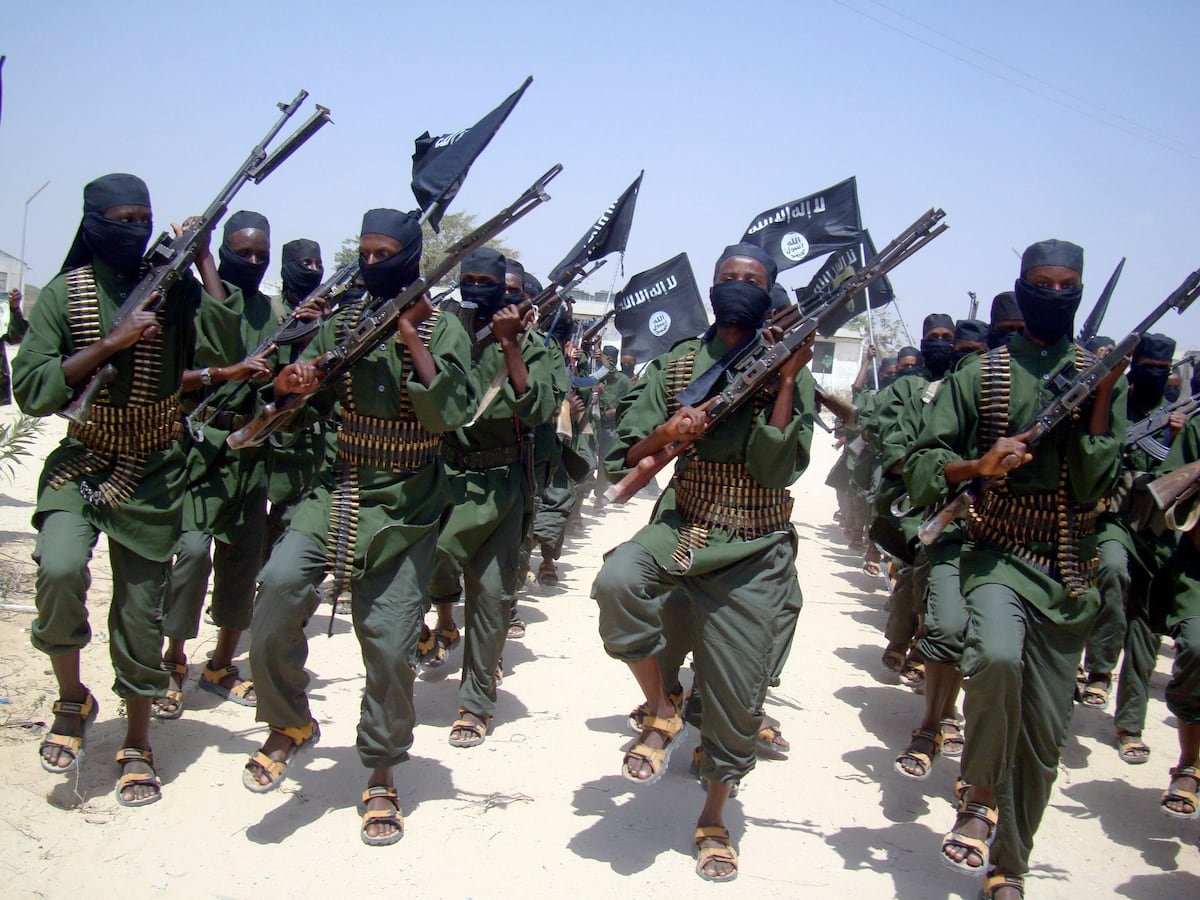
From the Horn to the Sahel, a jihadist front is gaining ground across Africa, the Center for Strategic and International Studies warned in its annual risk analysis.
The “Global Terrorism Threat Assessment 2026″ identifies terrorism on the continent as “the greatest uncertainty,” citing the rising capabilities of al-Qaida and Islamic State affiliates.
“Unlike the Middle East’s terrorist organizations, most African terrorist groups are unquestionably ascendant,” the authors wrote, pointing to larger fighting forces, greater financial resources, and the groups’ ability to move through wide swaths of territory.
Many are also capitalizing on the proliferation of unmanned aerial systems and artificial intelligence to enhance their deadly effectiveness.
“These new capabilities unlock new forms of operation, facilitation, and inspiration for international terrorists, requiring novel responses from states, which may also take advantage of emerging technologies,” the report said. “Given the increasing pace of technological change, the future of how terrorists and counterterrorists will act against each other is increasingly unclear.”
The report classifies Al Shabaab, a Somalia-based al-Qaida-affiliated group, as Africa’s most capable – and likely largest – terrorist organization, with the clearest demonstrated intent to attack American interests. But the authors stop short of declaring that this group represents an imminent threat to the U.S. homeland.
“Al Shabaab seems focused on its regional objectives, meaning the probability that an African terrorist group attempts a mass-casualty attack against the U.S. homeland remains low,” the authors wrote.
Meanwhile, ACLED, a nonprofit organization that collects conflict data, recorded that nearly 80% of all ISIS activity during the first 11 months of 2025 occurred in Africa, marking a 50% increase from the previous year.
At the heart of that surge is the Islamic State West Africa Province, orISWAP, a powerful insurgent network in the Sahel that poses the most significant challenge to Al Shabaab’s dominance on the continent and increasingly serves as a hub for intelligence gathering and logistical coordination among Islamic State branches in the region.
“ISWAP has also recently benefited from external support in the form of trainers deployed by the international Islamic State organization to increase ISWAP capabilities in UAS operations, advanced explosive assembly, and military tactics,” the authors wrote.
The Trump administration has recently focused its African counterterrorism strategy on those two theaters: Somalia, where U.S. Africa Command, or AFRICOM, has ramped up air and drone strikes, and Nigeria, where Washington has launched a series of airstrikes alongside local partners and deployed a small contingent of U.S. personnel to support training efforts.
Yet these developments come as the United States has reduced its military footprint in Africa by 75%.
Gen. Dagvin Anderson, the head of AFRICOM, told lawmakers in May that the departure of American and allied forces had created “an intelligence black hole” on the continent. Anderson also emphasized that his command was operating with the “minimum necessary resources” and that its diminished force posture was compromising its ability to respond to crises.
Tanya Noury is a reporter for Military Times and Defense News, with coverage focusing on the White House and Pentagon.
Read the full article here