

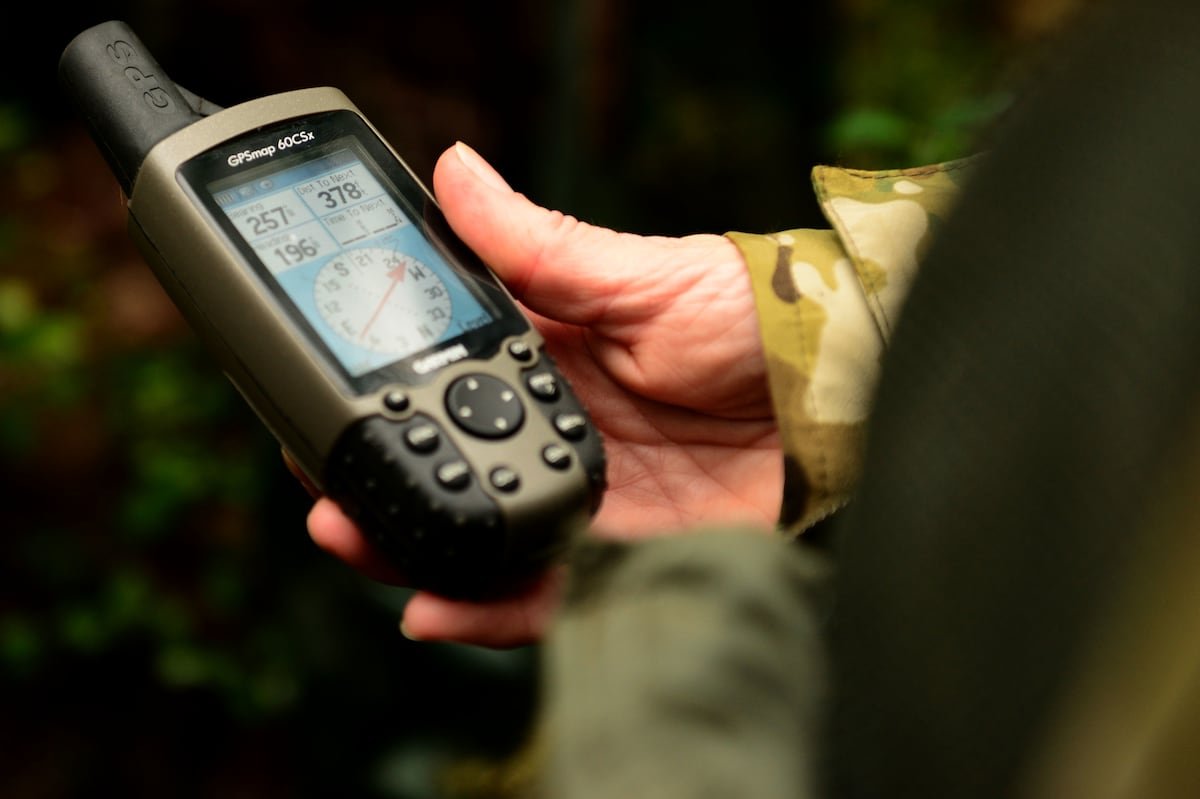
Military commanders love to warn troops that overreliance on GPS technology could spell disaster when signals are jammed or networks go down. But could handing navigation over to a computer be diminishing their powers of observation and decision-making skills as well?
That’s the question an upcoming study from the University of Texas at Arlington aims to find out. The yearlong, $200,000 study, funded through the Department of Defense via a sub-grant, will use virtual reality simulations to track aspects of observation and recall in subjects with and without navigation aids.
Steven Weisberg and Hunter Ball, associate professors of psychology at the university and the leaders of the study, said findings could help inform the design of computer interfaces and even guide personnel assignments in a unit, based on how much technological support troops need and how their brains respond to it.
“If you’re fostering a scenario in which people are overrelying on things, they might not be able to use their own cognition when the time comes for them to do so, and so we want to identify … the specific design features that help out with that,” Ball said. “We also want to identify — more long-term — individual differences. If I’m someone who has really low cognitive ability, I might always be relying on that external [guidance] source, and that’s going to be really good for me, but I’m going to suffer really bad whenever that goes down.”
Ball continued that if commanders have a sense of troops’ cognitive abilities in these areas, they can make more effective role assignments.
While overtly ranking troops by cognitive performance seems a little far-fetched, performance on the Armed Services Vocational Aptitude Battery prior to entering military training does help determine what jobs troops are eligible for.
It’s plausible that a new test during the physical and academic evaluation process could assess how troops interact with technological aids and gain job-assignment insights from that.
For the study, which kicks off Aug. 1, undergraduate volunteers will be asked to navigate a small city using a combination of desktop and head-mounted virtual reality.
“We’re using that environment to see how well people can remember routes and buildings and landmarks while they have access to certain kinds of navigation support,” Weisberg said. “And then we viciously take it away from them.”
Researchers will then collect behavioral data, including how well the subjects under different guidance conditions remember routes and other environmental features. They’ll also capture eye-tracking data, Weisberg said, showing what they’re spending the most time observing and absorbing.
As a side benefit, the researchers expect the study to help demonstrate the value of behavioral research in virtual reality, which may also have implications for how the military employs VR simulators and training aids.
“We can apply this into these more in-depth and applied settings. We can do the real-world training, we can have soldiers go through this training with the virtual headsets and navigating in these environments and understanding what things might actually look like,” Ball said. “But we have to first understand what are the cognitive mechanisms under there, and that’s what we’re trying to figure out at this point.”
The study will run through next year, with a complete write-up of findings delivered by next summer. The researchers are hopeful they can land a follow-on grant, which they say would help, among other things, observe how teams interact as they monitor a wide range of data sources and screens, and dig deeper into collected eye-tracking data to learn about what information troops retain and remember based on what they observe.
Read the full article here