

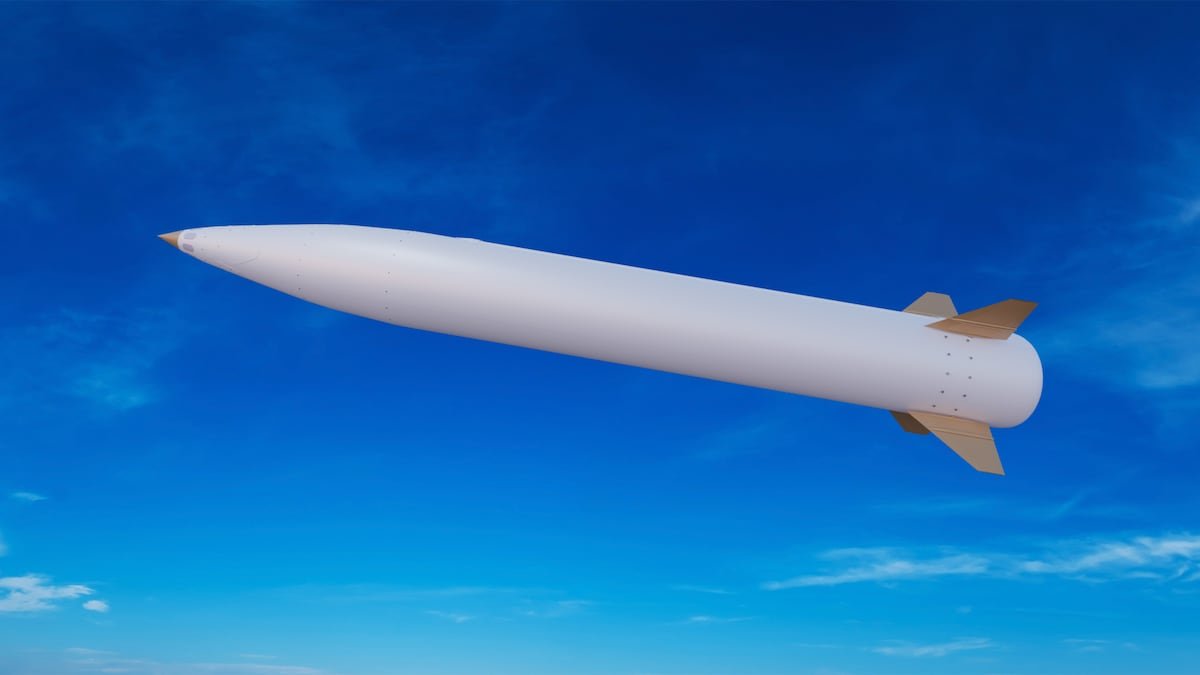
Following the first combat launch of its long-range Precision Strike Missile, or PrSM, Lockheed Martin successfully tested an upgraded version of the weapon that is designed to hit moving vessels at sea.
While the PrSM Increment 2 is part of the U.S. Army’s long-range fire program, it is designed for sea denial. It features a seeker within its navigation system that provides targeting guidance and homes in on fast-moving threats, including ships.
Its new capabilities will allow the Army to “strike relocating or fleeting targets in both land and maritime environments,” according to a statement released by Lockheed.
The company said the first flight test was a “major milestone” and added that missile development was “backed by significant investment,” thus advancing rapidly through initial tests. Two more tests are set to take place this year.
The upgraded missile builds off the foundation of its predecessor, and both systems share common baselines.
RELATED
Both missiles are compatible with M142 High Mobility Artillery Rocket Systems, or HIMARS, as well as the M270A2 Multiple Launch Rocket System, or MLRS, which is commonly used in European countries.
The missiles are designed to withstand turbulent in-flight weather conditions, and their warheads are built to deliver fragmentation effects when they explode on impact.
During the recent test, the upgraded PrSM launched from a HIMARS system and flew more than 200 miles.
“With Increment 2, PrSM delivers the long-range capability the Army asked for to defeat moving land and maritime threats,” Carolyn Orzechowski, vice president of Lockheed Martin Precision Fires Launchers and Missiles, said in the statement.
Production of the the original PrSM was already accelerated last fall prior to its combat debut in Operation Epic Fury, during which it was fired against Iranian targets from HIMARS launchers positioned in open terrain.
The PrSM was launched among an array of weapons systems, including Patriot Interceptor Missile Systems and THAAD Anti-Ballistic Missile Systems. LUCAS one-way attack drones were also used for the first time by the U.S. Special Operations Command-led Task Force Scorpion Strike.
Zita Ballinger Fletcher previously served as editor of Military History Quarterly and Vietnam magazines and as the historian of the U.S. Drug Enforcement Administration. She holds an M.A. with distinction in military history.
Read the full article here