


As the Pentagon requests a massive budget increase to develop autonomous weapons, some senators worry that DoD policy isn’t keeping pace.
DOD’s “policy architecture really has to scale with it,” Sen. Joni Ernst, R-Iowa, said Tuesday during a hearing of the Senate Subcommittee on Emerging Threats and Capabilities. “And this is where we probably lag behind.”
During the hearing, which focused on science priorities in the Pentagon’s fiscal 2027 budget request, Ernst pointed to a massive increase proposed for the Defense Autonomous Working Group, or DAWG.
The Trump administration is seeking $55 billion for DAWG, up from its $225 million budget for the current fiscal year.
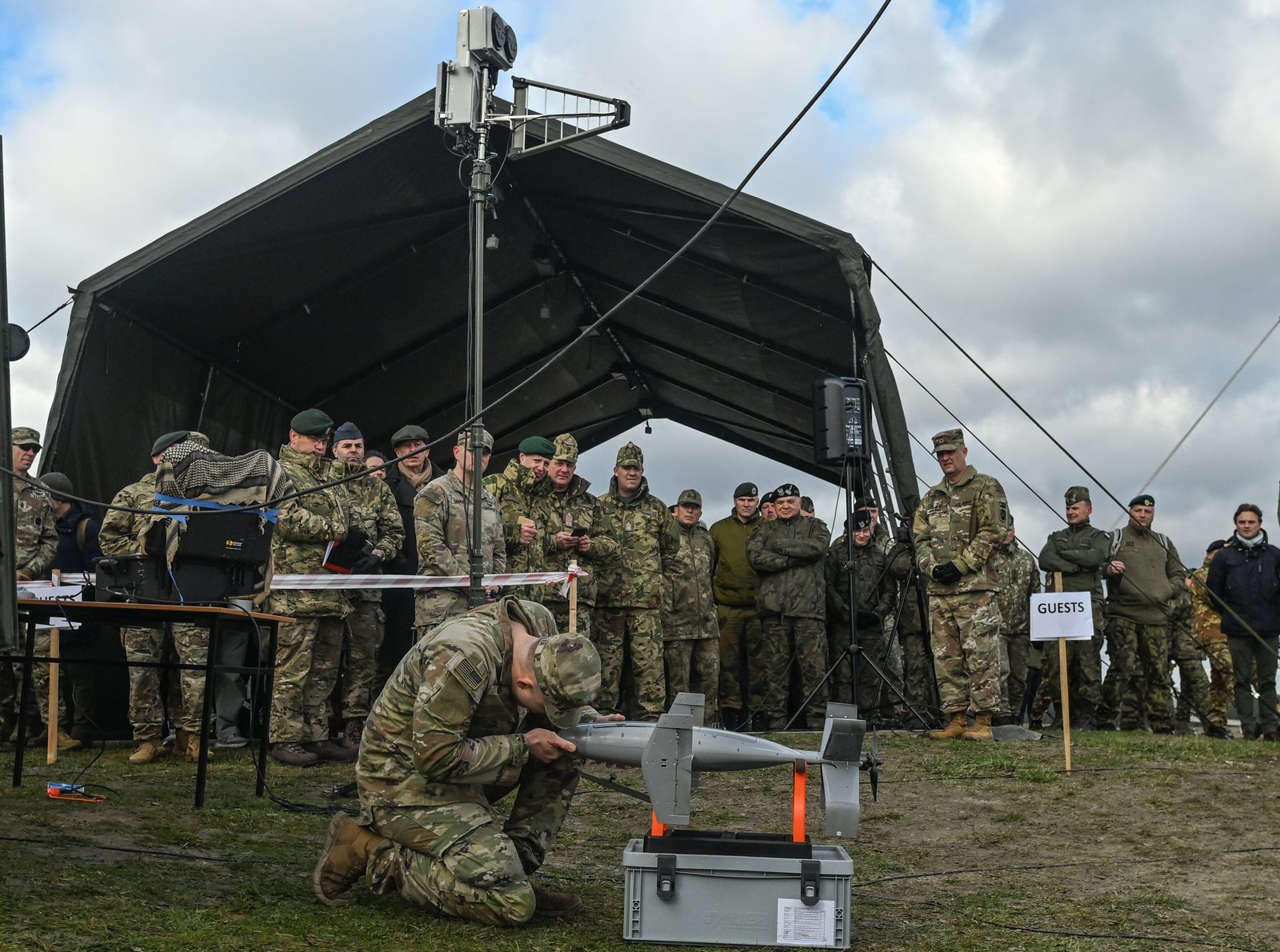
With drones dominating the battlefield in Ukraine, and Iran unleashing drones against U.S. forces in the Persian Gulf, DAWG has the high-priority task of developing unmanned vehicles and autonomous weapons.
In 2023, DoD updated Directive 3000.09, which provided guidelines for autonomous weapons. In particular, 3000.09 specified that “autonomous and semi-autonomous weapon systems will be designed to allow commanders and operators to exercise appropriate levels of human judgment over the use of force.”
Ernst expressed concern that alongside the much greater use of drones, the targeting process to employ those weapons is increasingly driving by artificial intelligence.
“And at the same time, we’re integrating the AI-driven targeting with those autonomous munitions at a pace that DoD Directive 3000.09 was not designed to contemplate,” Ernst said.
RELATED
Emil Michael, the under secretary of defense for research and engineering and the DoD’s chief technology officer, agreed that policy on autonomous weapons “absolutely needs updating. Not only because of the capability potential increase, [but also] because of the threat environment, what’s possible by the adversary and partly because of the lessons we learned in Iran.”
Autonomy will be a part of future U.S. defense capabilities, from technology to detect and clear mines, to space-based intercepts to stop Chinese hypersonic missiles, Michael said.
“So there are going to be different risk levels with autonomous,” he added. “And we have to account for them in our policies. And my belief is that this will change more frequently than it has in the past.”
Sen. Elissa Slotkin, D-Mich., compared the use of AI with the U.S. effort to develop atomic weapons in World War II.
RELATED
The Manhattan Project was funded by the government, even though the Roosevelt administration often hid from Congress where the money was really going. Today, innovation in AI, drones and autonomous weapons is primarily driven by the private sector, which raises questions about how the government’s ability to impose restraints.
“I do not believe that a private-sector company should get to decide what the rules are,” Slotkin said. “But I got to be honest, I think it is part of our congressional role up here to provide left and right limits, that provide some guidelines for how we govern this very new technology.”
Michael Peck is a correspondent for Defense News and a columnist for the Center for European Policy Analysis. He holds an M.A. in political science from Rutgers University. Find him on X at @Mipeck1. His email is mikedefense1@gmail.com.
Read the full article here