
On June 6, 1944, over 160,000 Allied troops were sent across the English Channel onto the beaches of Normandy, France, marking the assault on Western Europe. Yet the operation, dubbed Operation Overlord, almost ended in disaster before it even began.
Now, the upcoming film “Pressure,” adapted from writer David Haig’s 2014 play of the same name, is set to relieve those angst-filled 72 hours leading up to D-Day.
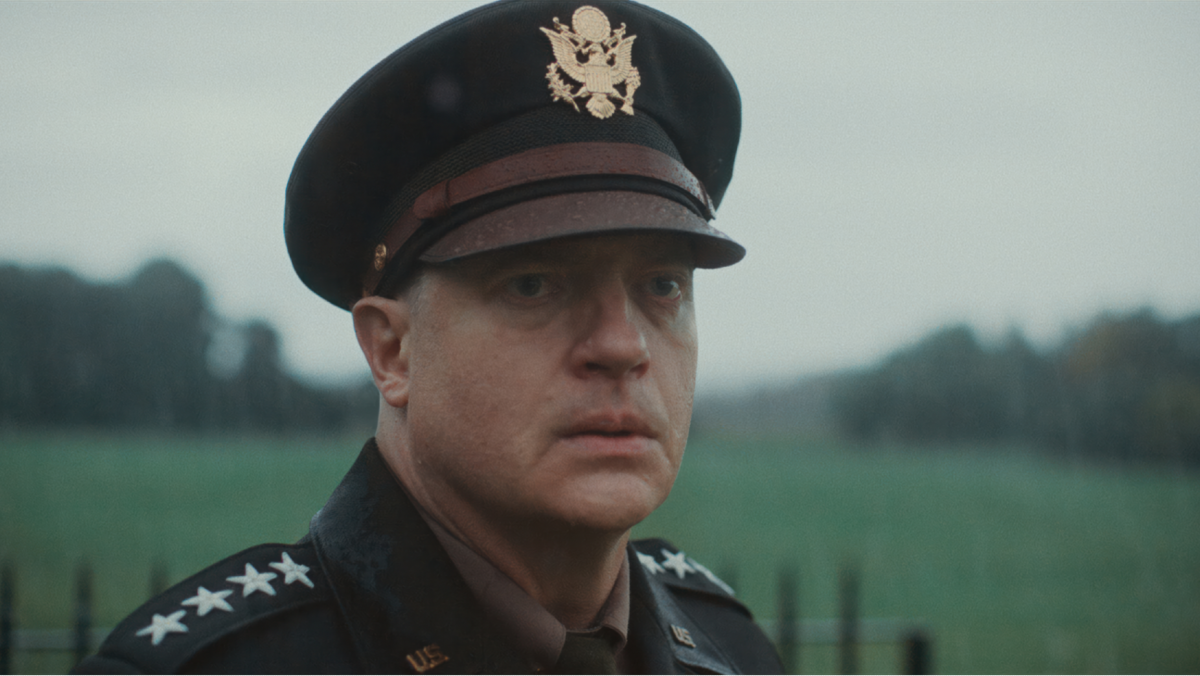
The film stars Academy Award winner Brendan Fraser (“The Whale”) as Supreme Commander of the Allied Forces Dwight D. Eisenhower and Andrew Scott (“Fleabag”) as Group Captain James Stagg, the chief meteorologist who predicted the storms over Western Europe in the days leading up to the invasion.
Premiering in theaters on May 29, “Pressure” depicts this true yet stranger-than-fiction story of Stagg’s unenviable task of predicting the English Channel’s notoriously fickle weather.
The lanky Brit, later described by his son a “dour irascible Scot,” alongside a team of forecasters from the Royal Navy, British Meteorological Office and U.S. Strategic and Tactical Air Force, knew the Allies only had a small window — nine days in May and June — that were suitable for the invasion.
“The days needed to be long for maximum air power usage; a near-full moon was needed to help guide ships and airborne troops; and the tides had to be strong enough to expose beach obstacles at low tide and float supply-filled landing vehicles far onto the beach during high tide,” according to a DoD breakdown of D-Day. “H-Hour was also crucial in that it relied on those tides to be rising at that time. There also had to be an hour of daylight just beforehand for bombardment accuracy.”
Eisenhower set the date for the invasion to be June 5, but in the wee hours of June 4, 1944, Stagg recommended halting the 7,000 naval vessels — including battleships, destroyers, minesweepers, escorts and assault craft — carrying more than 160,000 troops.
Despite his recommendation, the weatherman was certain only in his uncertainty, writing in his diary on June 4, 1944, “I am now getting rather stunned — it is all a nightmare.”
“He was just greatly interested and brilliant at his job,” Scott told Military Times. “He wasn’t looking, number one, for people to like him in the war room. That wasn’t really his world. He was looking to do the right thing. He had to deliver this forecast that he knew he was capable of delivering.”
The aptly titled “Pressure” depicts an anguished Eisenhower on the eve of the invasion, with the weight of the free world and the largest, most dangerous seaborne invasion in history all hinging on a weather report.
“We tend to hear about or learn about the most dramatic or the most swashbuckling kind of adventure stories. … I think there’s something quietly heroic about a guy like Stagg, who’s got to leave his pregnant wife, he’s got to go to work, he’s got to save the world [and then go] home again as though nothing happened,” Anthony Maras, who directed and co-wrote the script with Haig, told Military Times.
“Stagg’s a bit like an intellectual superhero in a way in that he has the courage to stand by his convictions. He has the courage to tell people who are superior to him — who are in charge of the biggest military machine in the world — what they do not want to hear, but what they need to hear,” Maras added. “I found [that] fascinating — that one decision can change history. You’ve got these really brilliant people — whether they be scientists, generals or officers — who are really capable, who have very different ideas about what to do. And as the clock ticks down for launching or not launching the biggest invasion in history, seeing these men and women go crazy in indecision, not knowing what to do, is inherently dramatic.”
Stagg’s intel proved correct and a storm broke over the English Channel on June 5. However, further postponement would have meant a two-week delay. Stagg believed there would be a small break in the storm and, just before dawn 24 hours prior, Eisenhower made the decision to go on June 6.
If the titanic invasion wasn’t enough to fray Eisenhower’s nerves, just six weeks prior, on April 27–28, Exercise Tiger, the dress rehearsal for Operation Overlord, had gone hideously awry.
Taking place in Slapton Sands, England, friendly fire and German E-boats claimed the lives of more than 1,000 men and resulted in the worst loss of life for American troops since the Dec. 7, 1941, Japanese attack on Pearl Harbor.
In fact, five times more men died at Slapton Sands than were killed storming Utah Beach on D-Day. As a result of the rehearsal, however, the Allies learned valuable, though grim, lessons that would be essential to the success of the invasion.
Just several weeks after the operation Stagg noted in a memo to Eisenhower that had the Allies postponed to later that June, they would have encountered the worst weather in the English Channel in two decades.
“I thank the Gods of War we went when we did,” Eisenhower wrote back.
Claire Barrett is an editor and military history correspondent for Military Times. She is also a World War II researcher with an unparalleled affinity for Sir Winston Churchill and Michigan football.
Read the full article here