

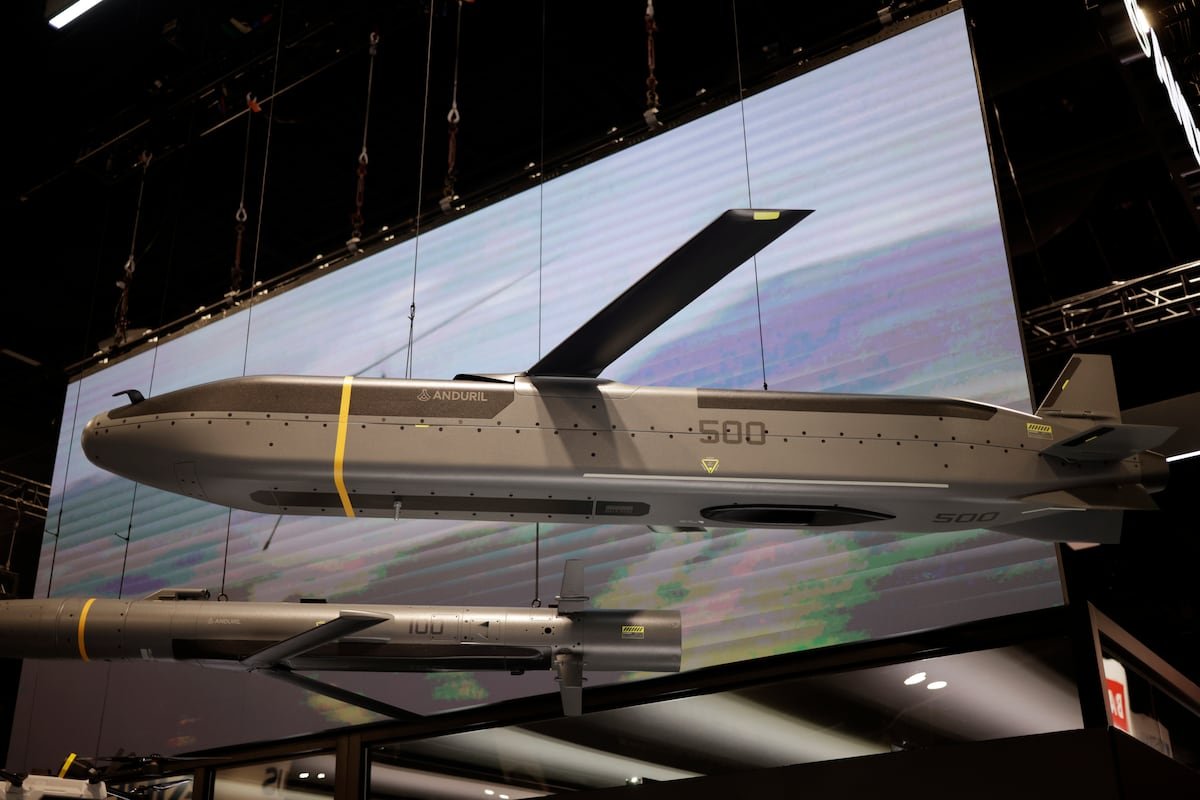
The Pentagon is moving to buy thousands of affordable cruise missiles, reaching framework agreements with three companies on Wednesday.
The deals fall under the U.S. Air Force’s Family of Affordable Mass Missiles program, or FAMM. The Defense Department said it reached agreements with Anduril for its Barracuda-500, CoAspire for its Rapidly Adaptable Affordable Cruise Missile and Zone 5 Technologies for its Rusty Dagger.
The move boils down to cost-effectiveness. The Air Force is betting that low-cost weapons can do the work the service once reserved for far more expensive munitions.
Joint Air-to-Surface Standoff Missiles, designed to be fired at heavily defended targets from a safe distance, cost more than $1.3 million apiece. The service wants its new missiles for a fraction of that, closer to $218,000 per round, cheap enough to shoot many for less than it once cost to shoot one.
The FAMM program splits into a lugged variant carried by fighters and bombers (FAMM-L) and a palletized variant dropped from airlifters (FAMM-P), both with ranges of 250 to 500 miles.
Anduril said its framework agreement runs seven years, with deliveries starting in 2027. According to the company, the Air Force intends to buy up to 8,000 FAMM rounds a year across both variants and all the competing vendors.
The deals are framework agreements, not orders for missiles. They set the terms and promise the companies steady business, giving them a reason to invest in bigger production lines.
The Defense Department said the missiles still have to complete testing and qualification, and that the actual buys depend on Congress approving the multiyear deals the Pentagon is seeking.
Anduril pitched its missile as proof that cheaper weapons can be built at volume.
“Barracuda-500 is specifically designed to expand the United States’ stand-off strike capability,” Anduril said in its release. “By augmenting existing critical munitions inventories with a more affordable, producible, and flexible option, Anduril is enhancing America’s arsenal of munitions, ensuring that we have the capability required to deter our adversaries.”
To keep the vendors competing, the Pentagon is splitting the work among all qualified suppliers under firm fixed-price terms with a minimum order floor, and companies that beat their production schedules become eligible for additional orders.
Budget projections call for 28,000 missiles across all vendors over five years for $12.6 billion, reaching 7,990 rounds in the final year.
The agreements stem from the Acquisition Transformation Strategy, the Pentagon’s push under Defense Secretary Pete Hegseth to buy weapons faster and from nontraditional suppliers.
Undersecretary of Defense for Acquisition and Sustainment Michael P. Duffey said the FAMM deals showed the department “expanding the defense industrial base, fielding capabilities faster, and attracting private investment.”
Zone 5 runs its U.S. operation from California but was acquired in June by Kongsberg, a Norwegian defense company. Anduril and CoAspire are based in California and Virginia, respectively.
The agreement comes on the heels of a May announcement that tapped the same three companies, along with Leidos, for the Army-led Low-Cost Containerized Missiles program, a parallel push for ground-launched affordable missiles.
Michael Scanlon is a defense journalist covering air and space warfare. A former U.S. Air Force A-10 crew chief, he has supported land and sea programs for the U.S. Army, Navy, Marine Corps and Coast Guard.
Read the full article here