
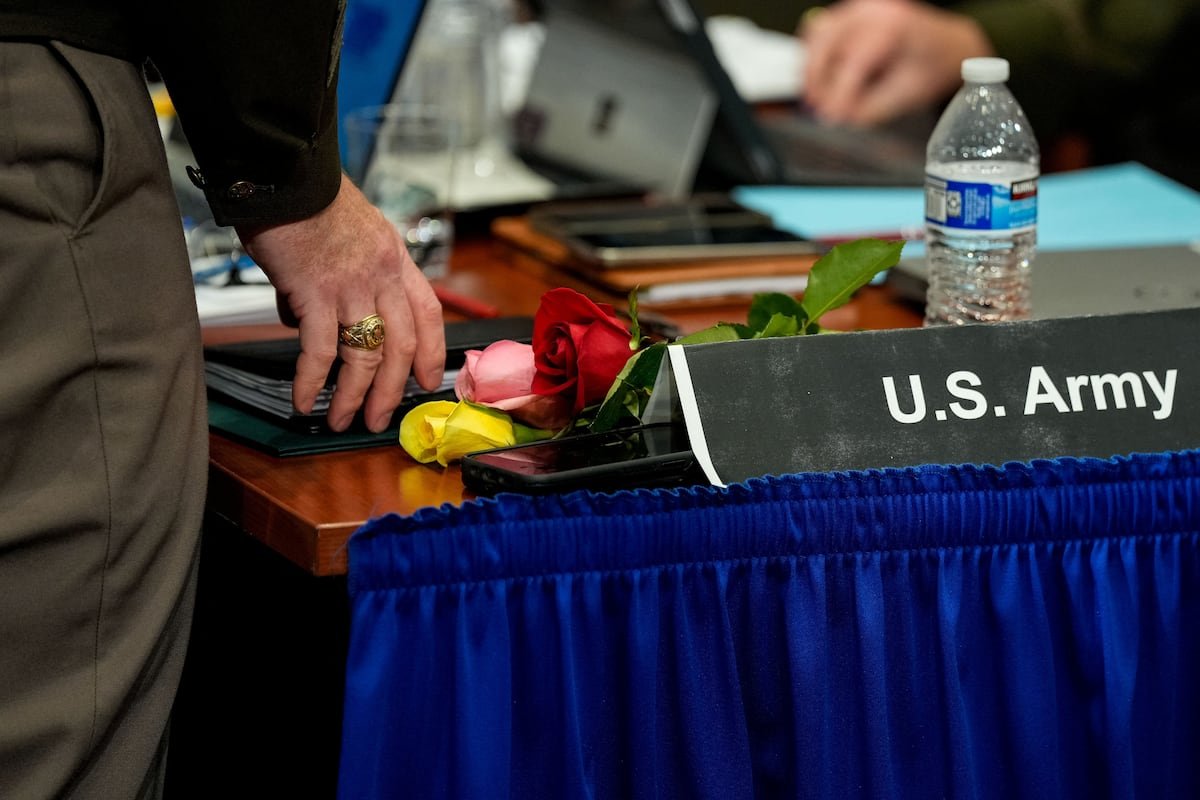
The collision of an American Airlines regional jet and an Army Black Hawk helicopter near Ronald Reagan Washington National Airport last year that killed 67 people was the result of several systemic failures, according to a U.S. Army investigative report seen by Reuters.
The previously undisclosed report, completed in May, made a series of safety recommendations and said the key factor was two broken radio transmissions resulting in the helicopter crew not receiving critical details from air traffic control.
The report also found a number of other issues, including technical issues with the Black Hawk and a pattern of helicopter crews failing to fly semiannual minimum hours. It said many helicopters in the Army battalion — including the one in the January 2025 collision — did not have Traffic Alert and Collision Avoidance systems.
The report also said Army work with the Federal Aviation Administration on helicopter incidents in the Washington area before the collision was lacking and a working group “did not discuss airspace violations, near-miss reports, or pilot deviations.”
National Transportation Safety Board Chair Jennifer Homendy said in an Oct. 1 letter to the Army that it had made significant progress in addressing its recommendations from the collision. It added, however, that it needed to do more work as “the Army’s aviation safety system failed to consistently detect, interpret, and act on signals of latent hazards, resulting in degraded safety assurance, organizational learning, and safety culture.”
The NTSB report on the crash in January found a series of failures by the FAA were largely responsible for the deadliest U.S. aviation disaster in more than two decades.
The Army report noted that the helicopter was not providing key safety location data, known as ADS-B Out, due to improper maintenance. After the incident, the Army issued an urgent safety message to inspect all Army aircraft transponders to ensure ADS-B Out functionality, and all 3,600 Army helicopters were inspected by July 2025.
The report also noted the Army had not addressed issues that led to the helicopter providing inaccurate altitude data and proposed a series of recommendations to address the issue. It also said the Army needs more advanced night vision equipment for pilots.
The Army report also faulted FAA air traffic control for using “non-standard terminology for directing air traffic and providing incomplete traffic advisories.”
The FAA did not immediately comment. The Army said in a statement on Thursday that it has implemented stronger training and surveillance checks and completed new helicopter safety inspections and testing on altitude awareness. It also said it was pursuing an FAA data-sharing agreement to help identify potential midair collision risks.
The report also called for improved training for military pilots around Washington and Baltimore commercial airports and for reviews of Army helicopter operations near major cities in the United States, South Korea, Japan and Germany.
Congress is still debating aviation safety legislation after lawmakers passed competing versions. The family of First Officer Sam Lilley, who was killed in the collision, said the Army report shows “the system failed everyone that night. The Army’s report acknowledges failures involving known altimeter issues, near-miss reporting, training, risk mitigation and safety culture.”
Read the full article here