

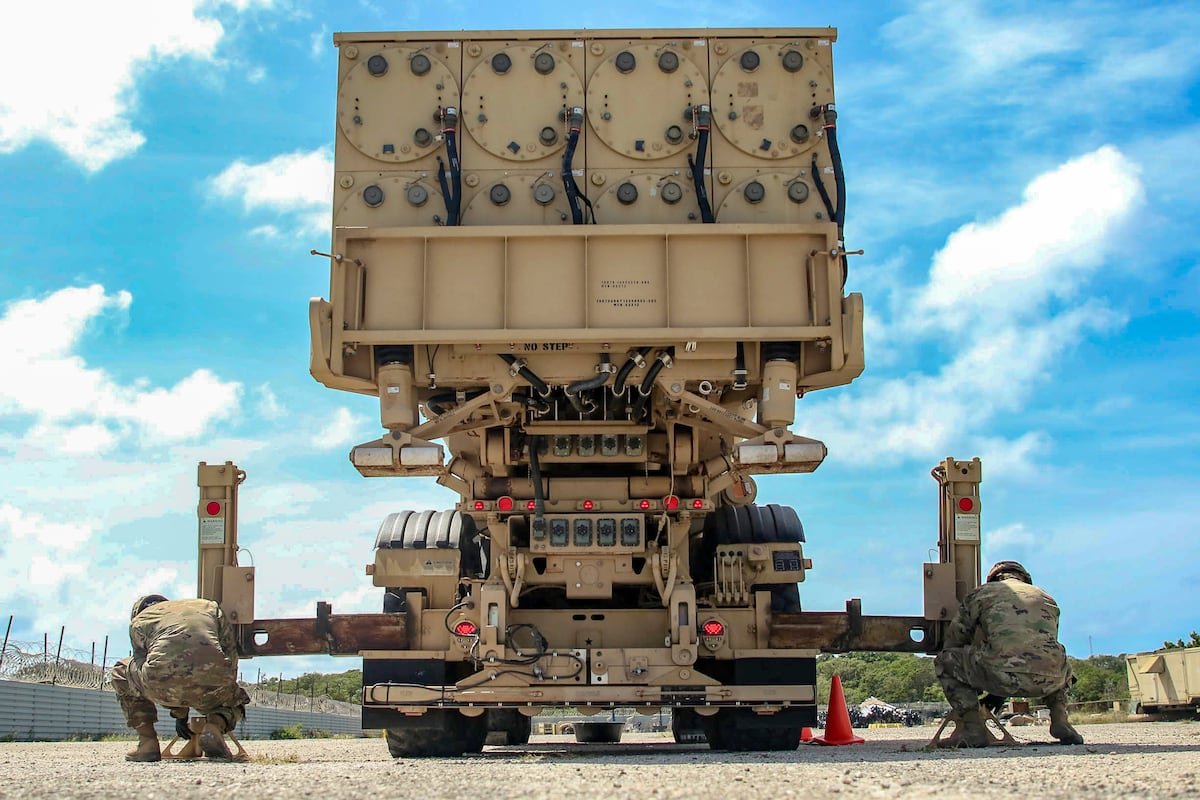
The U.S. military’s increased use of missile interceptors during the war with Iran poses long-term strategic risks to integral defense capabilities if fighting spills into a long term conflict, experts caution.
Military Times spoke with several national security specialists, defense analysts and foreign policy pundits who warned that the U.S. military’s finite interceptor stockpile could be strained and potentially exhausted if the ever-changing projected timeline of Operation Epic Fury depletes a resource that cannot be replenished at the scale and pace of war.
“You can’t replace those kinds of missiles overnight,” said Kelly Grieco, a senior fellow at the Stimson Center, a nonpartisan Washington think tank. “It would take years.”
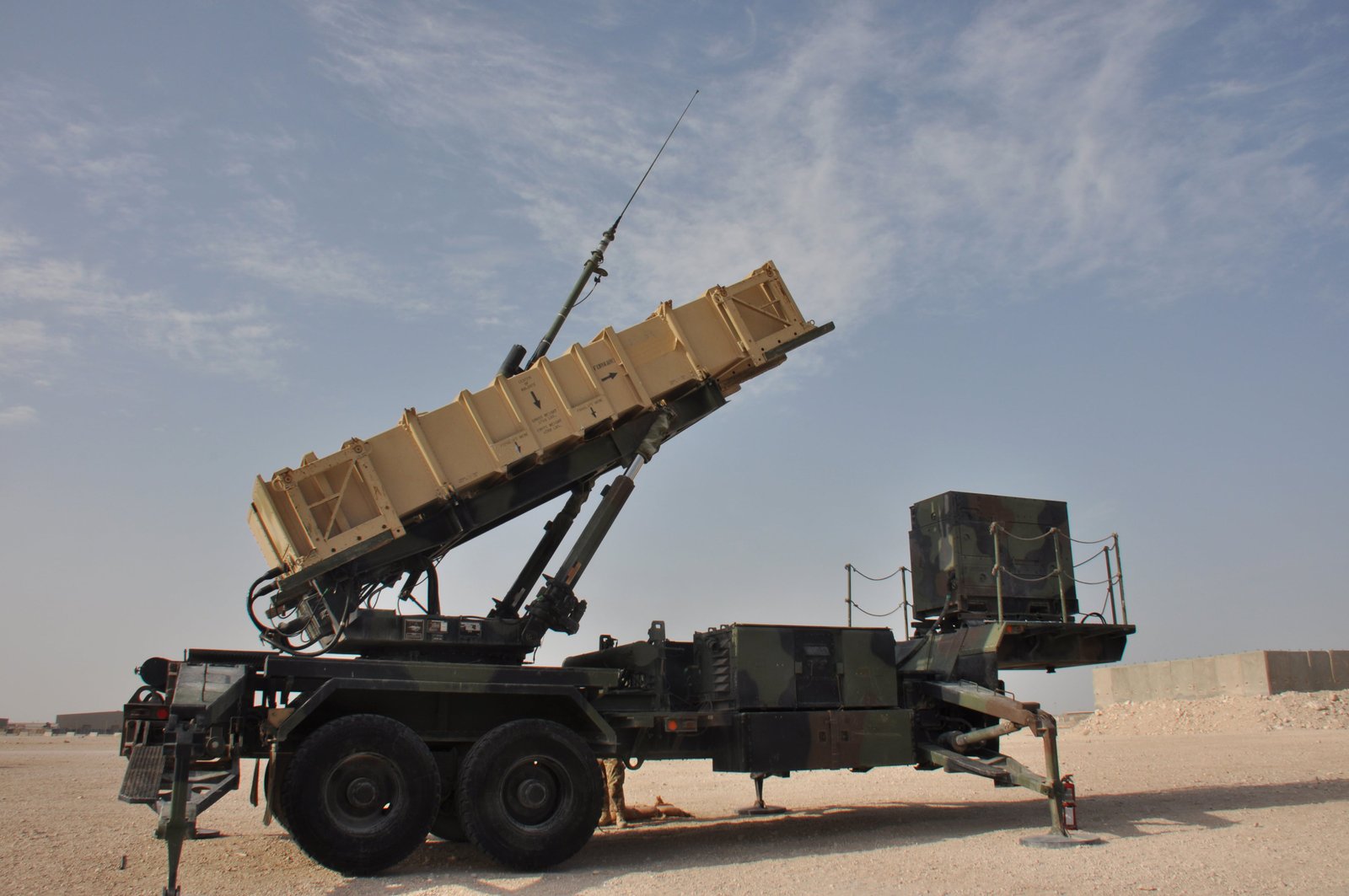
The U.S. currently employs several systems designed to destroy incoming missiles and drones, including the Patriot missile defense system, Aegis Combat System (SM-3/SM-6) and Terminal High Altitude Area Defense (THAAD) anti-ballistic missile systems.
The first two are launched from naval vessels, while the latter is launched from land.
As of December 2025, the Missile Defense Agency’s arsenal of SM-3s was 414 and the number of THAAD interceptors was 534, according to the Center for Strategic and International Studies.
Conversely, the DOD had amassed an abundance of nearly 270 Patriot PAC-3 Missile Segment Enhanced per year since 2015.
But SM-3s and THAADS, known as ballistic missile defense unique interceptors, are the most adept at air-defense against incoming munitions, according to CSIS. As a result, they cost more and take longer to manufacture.
Though the exact number of interceptors used by the U.S. military during the first six days of Operation Epic Fury has not been released by the Defense Department, Grieco said it was likely not an insignificant amount, stressing that the resource was limited.
The U.S. likely used between 100 and 150 THAAD interceptors and 80 SM-3s in support of Israel during its Twelve-Day War with Iran and an unknown amount of Patriot interceptors in Qatar to defend Al Udeid Air Base from Iranian attacks, according to CSIS.
More than 150 THAAD interceptors would equate to roughly 30% of the THAAD stockpile, which is “concerning,” CSIS said.
If the U.S. used interceptors during the current Iran war at the same rate it did during the Twelve-Day War, it would use half of its entire interceptor stockpile in four to five weeks, according to Grieco.
Israeli officials assessed that Iran possessed 1,500 missiles and 200 launchers at the end of that war, according to Iran Watch, a website published by The Wisconsin Project on Nuclear Arms Control that tracks Iran’s missile capabilities.
Their capabilities grew in the months that followed, with Iran reportedly possessing roughly 2,500 projectiles as of March 1.
But if the U.S. does dip that far into their interceptor stockpile, it would likely require interceptors from other theaters to be moved to CENTCOM, stripping U.S. military assets bare in those other areas of operations.
RELATED
If the Iran war bled into multiple months and the U.S. interceptor usage rate was similar to that of the 12-day war, the U.S. could hypothetically deplete its entire interceptor stockpile, Grieco said.
Before that would even happen, however, U.S. military forces would have to transition away from attempting to intercept everything.
Resources stretched thin
Six U.S. service members died Sunday when their makeshift operations center at a civilian port in Kuwait was struck by a suicide drone.
The missed opportunity for air-defense was the result of interceptor resources being stressed, said Daniel Shapiro, a fellow at the Atlantic Council who served in the Obama administration as the U.S. ambassador to Israel for six years.
“If there was nothing deployed, that obviously contributed because what resources we had, had to be deployed elsewhere,” Shapiro said. “If it was deployed, it was unsuccessful.”
Recognizing the need for more interceptors
The Defense Department signed a contract with Lockheed Martin in January that will quadruple the yearly production of THAAD interceptors from 96 to 400 and boost the annual production of the PAC-3 MSE from 600 to 2,000.
But this isn’t something that will happen instantaneously. The PAC-3 agreement, for instance, is slated to take place over seven years.
At this time, the U.S. military cannot immediately increase the number of interceptors by a vast margin.
“The Department of Defense is really good, but magic is still not one of its capabilities,” Grieco said.
The Trump administration is scrambling to replenish munitions resources and will host a meeting Friday with Lockheed Martin, RTX, L3Harris and other defense firm executives to discuss an uptick in missile systems production to replenish munitions used in the Iran war.
Stress on resources could also factor into the timeline for the conflict.
A dwindling amount of interceptors may have led to the end of the Twelve-Day War, according to Shapiro.
So many interceptors were used during that time that the U.S. and Israel were approaching interceptor inventory strain, he noted.
“My understanding was that had the conflict continued for another few days or another week or so, it could have become critical,” Shapiro said.
The volume of ballistic missiles Iran has fired from the first day of Operation Epic Fury has decreased by 90%, CENTCOM commander Adm. Brad Cooper said during a media briefing at MacDill Air Force Base Thursday. Iranian drone attacks had also decreased by 83% since day one.
The drop in Iran’s rate of firing projectiles possibly means that the U.S. offensive against Iranian missile capabilities and missile storage facilities is working. At this time, however, that remains unclear.
Dr. Sanam Vakil, director of the Middle East and North Africa Program at Chatham House, said during an Atlantic Council Thursday roundtable that the calculus regarding Iran was unknown.
“Certainly on day six, it looks like its capability to launch missiles is maybe reduced, but it could also be deliberate,” Vakil said. “Iran is prepared for a longer war than I think the U.S. administration clearly calculated for.”
Iran could be conserving missiles to distract with multiple attacks in different domains and or to prepare for a military campaign that will come in waves, she said.
Who can outlast?
The question is whether Iran can continue its barrage of ballistic missiles and drones and outlast the interceptor stockpile the U.S. has.
The Pentagon continues to provide assurances that Iran is not capable of this feat.
“We’ve got no shortage of munitions,” Hegseth said at the media briefing at MacDill Air Force Base Thursday.
Cooper said U.S. combat power continues to escalate while Iran’s is in decline.
And Chairman of the Joint Chiefs of Staff Gen. Dan Caine, who spoke at a Pentagon briefing Wednesday, addressed concerns regarding specific U.S. munitions shortages.
RELATED

“We have sufficient precision munitions for the task at hand, both on the offense and defense,” Caine said. “But I want to tell you, teammates, as a matter of practice, I don’t want to be talking about quantities.”
Despite the confidence both military officials projected, Hegseth and Caine reportedly admitted during a briefing with lawmakers Tuesday that Iran’s Shahed drones presented a problem for interceptors because they fly at a low altitude and can evade air defense systems, according to CNN.
And Iran has no shortage of the unmanned aerial vehicles — reportedly producing 10,000 per month, according to Reuters.
The drones are also cheap to manufacture, costing between $20,000 and $50,000, according to Open Source Munitions Portal, an online munitions archive run by a non-profit watchdog.
Aside from missile math, the unknown intended timeline for Operation Epic Fury also factors in.
President Trump said this week that the military campaign could last four to five weeks, but that the U.S. had the capabilities to go far longer than that.
Hegseth, during a Pentagon briefing Wednesday, implied that the war could stretch up to two months, but reiterated the president’s point that the U.S. has enough munitions and equipment to beat Iran.
“The question is which clock will run first,” said Mohammed Soliman, a senior fellow at the Washington think tank the Middle East Institute.
Soliman said that any boots on the ground, including Kurdish allies, has the potential to prolong the conflict, leading to potential U.S. interceptor depletion.
Shortly after Military Times spoke with Soliman, reports emerged that pro-American, Iranian Kurdish forces were supplied with arms by the CIA and preparing to attack Iran.
The stress on the interceptor stockpile also depended on the endgame, according to Shalom Lipner, senior fellow at the Atlantic Council who served for over 25 years in the prime minister’s office in Jerusalem.
“It’s a race of attrition between the two sides to see who can get over the finish line before the other,” Lipner said.
Sen. Mark Kelly, a member of the Senate Armed Services Committee, raised concerns over the interceptor math during an interview with CNN.
“We can deal with some of this, but if they have more offensive assets than we have defensive, we get into trouble here possibly really quickly if our magazine depth goes to zero and they can then shoot these things freely around the region,” Kelly said.
The United States launched Operation Epic Fury on Feb. 28, killing Iran’s supreme leader Ayatollah Ali Khamenei during the initial attack, leaving a vacuum of power that has yet to be filled, though Khamenei’s son is an early favorite to succeed him.
The Trump administration has laid out its objectives for the operation, including the decimation of Iran’s missile capabilities, navy and its nuclear facilities and program.
On Tuesday, Cooper announced on X that the U.S. military had struck nearly 2,000 targets, with more than 2,000 munitions. In retaliation, Cooper noted, Iran has launched over 500 ballistic missiles, and over 2,000 drones.
50,000 U.S. troops, 200 fighter jets, two aircraft carriers and bombers are currently stationed in the theatre, with personnel and ordnance reinforcement on their way, Cooper said.
The U.S. has destroyed hundred of Iran’s ballistic missiles, launchers and drones, focusing on “shooting all the things that can shoot at us,” according to Cooper.
Cooper said during the media briefing on Thursday that the U.S. military has destroyed 30 Iranian navy vessels.
Riley Ceder is a reporter at Military Times, where he covers breaking news, criminal justice, investigations, and cyber. He previously worked as an investigative practicum student at The Washington Post, where he contributed to the Abused by the Badge investigation.
Read the full article here
