

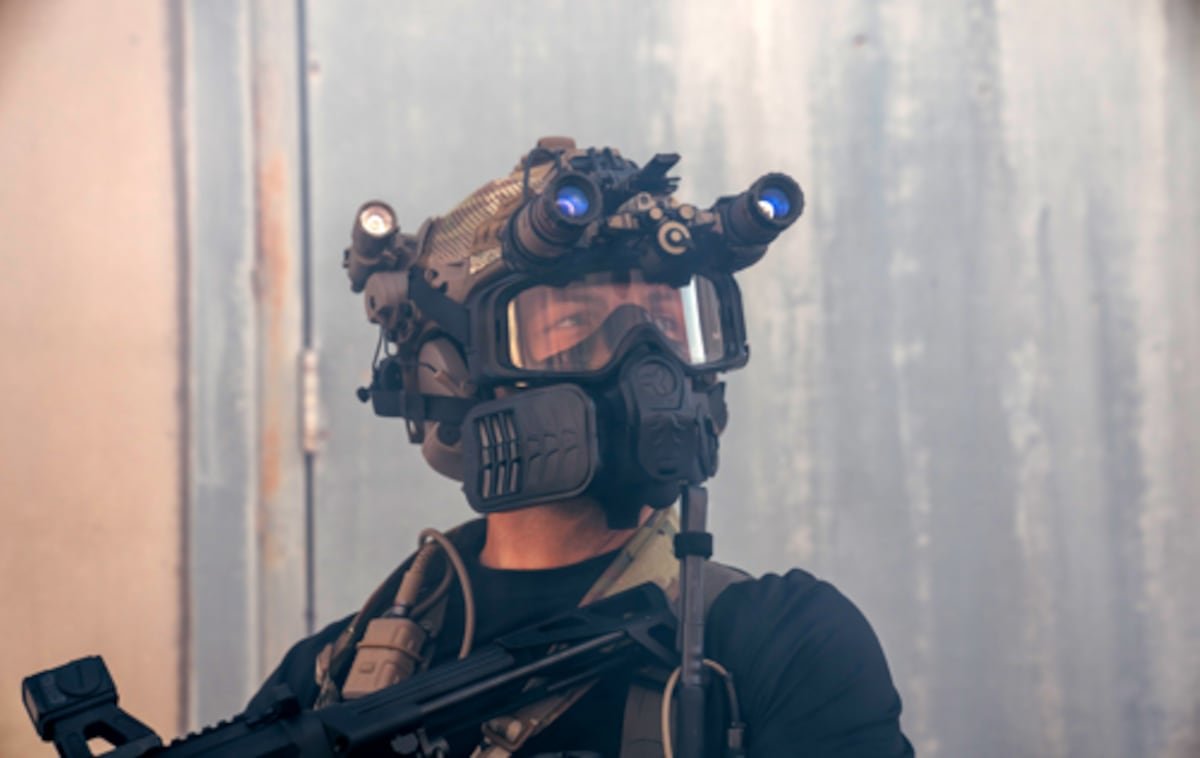
U.S. Special Operations forces will adopt a new face and breathing protection system after the Pentagon and Avon Protection announced a contract on Oct. 9.
The MITR half-mask and goggle system is designed to protect wearers from dangerous chemicals and toxic substances in the atmosphere, including lead powder from gunfire, ballistics and poisonous substances like fentanyl.
Casey Galligan, Avon’s senior director for the U.S. Homeland Security and the Department of Defense, told Defense News that fentanyl and chemicals found in drug labs are now part of a wide array of hazards that special warfare operators must guard against, in addition to biological weapons and other breathing hazards.
“Precursor drug chemicals now are a huge issue that are just as dangerous as a chemical hazard,” Galligan said. “As an operator, every day you’re doing something quasi-dangerous, particularly those at the frontline doing maneuver. This is not meant to replace a full-face respirator. A split system gives you options.”
The half-mask system walks the line between an N-95 disposable mask and a heavy, full-face respirator. The goggles and half-mask can be worn linked together or separated, giving operators a lightweight option that will give them eye and breathing protection as needed without requiring them to carry heavy full-face respirator masks.
The MITR features positive pressure-sealed goggles to stop hazardous chemicals from getting in around its edges. The system features sweat drainage outlets inside the goggles and blows cool air into them from both sides, preventing lens fogging.
A former U.S. Army Green Beret, Galligan said the system provides safety against toxic materials while allowing wearers to breathe easier — literally.
“If you don’t always want to be wearing a full-face respirator, and you’re worried about different levels of threats, this is a half-pound and easy to put on. You can wear it with a head harness or with helmet attachments,” he explained.
Half-mask systems are not new, but the MITR system has evolved constantly to incorporate new evolutions in technology to reach its current capabilities.
“We’ve been going through iterations and continuing to improve it,” said Galligan, adding that the U.S. is joining Canada and another FVEY nation in purchasing the system.
Elite warfare units of U.S. Special Operations are already wearing the new half-mask and goggles in the field, he disclosed.
“We’ve fielded it to units already. Some are en route right now, being delivered,” Galligan said. “The feedback I get talking with end users is pretty amazing.”
The Defense Department’s decision to equip SOCOM operators with improved breathing equipment follows a November 2025 report, called the SOF Cancer Study, which revealed that SOF operators face an 18% higher risk of cancer than non-SOF personnel due to hazardous materials in their environments that they are exposed to constantly in the line of duty.
Shifting to a half-mask system could mark the dawn of a new era in how military service members approach facial protection overall.
“When you see the tip of the spear using it, it’s going to make it a lot more acceptable,” Galligan said.
Zita Ballinger Fletcher previously served as editor of Military History Quarterly and Vietnam magazines and as the historian of the U.S. Drug Enforcement Administration. She holds an M.A. with distinction in military history.
Read the full article here