
I used to love working at the VA hospital. Just like everything Uncle Sam does, the Veterans Administration is bloated, inefficient, and frustrating. However, back when I worked there as a physician we still had a proper crop of World War II veterans who needed inpatient care. That was Candyland for a history nerd like me.
On the rare evening when we weren’t neck deep in chaos, all it took was an open door with the light on. I’d just knock, introduce myself, pull up a chair, and ask for a story. I met some of the most fascinating guys that way.
The Ride
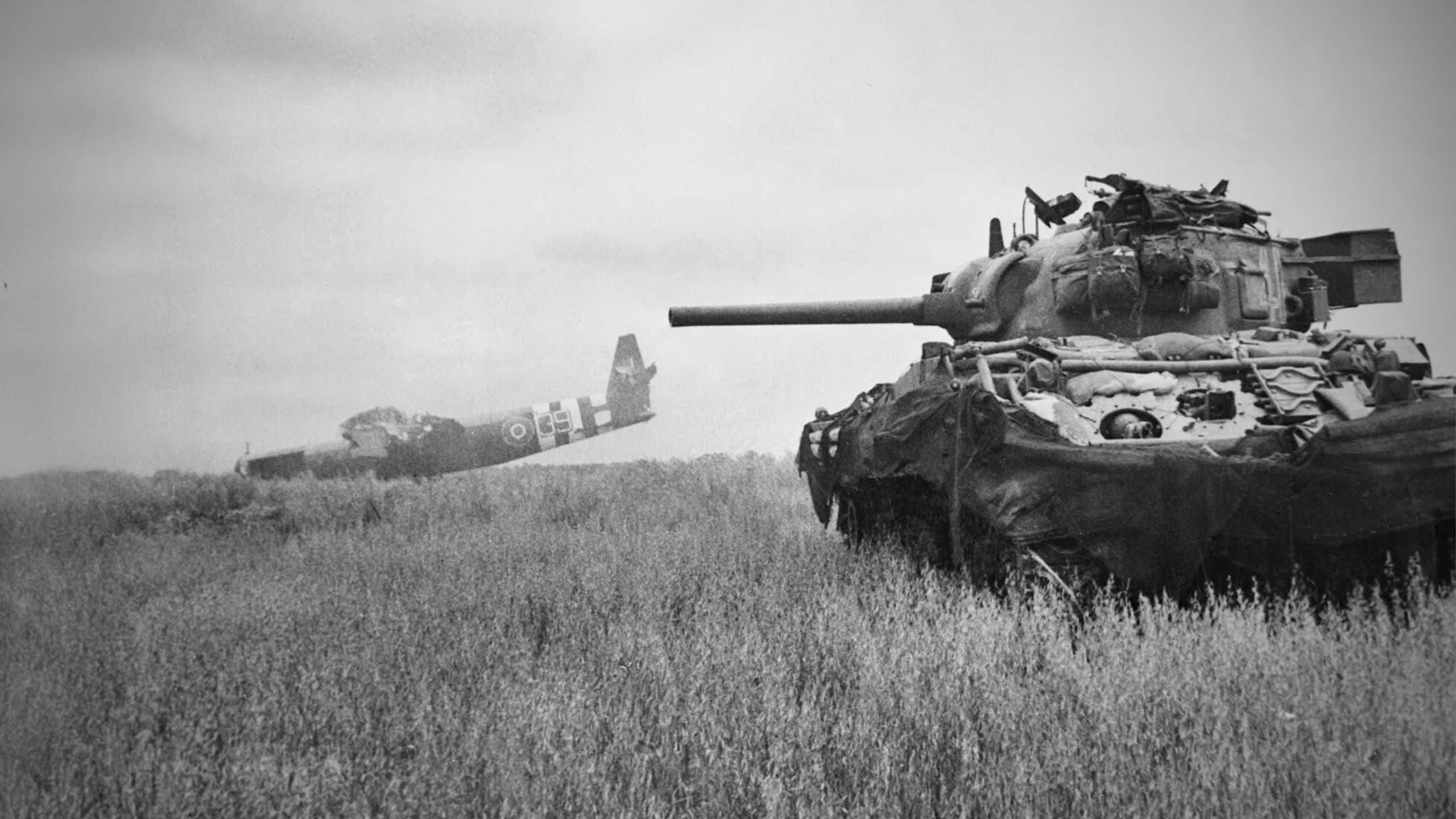
Powell was a tanker. He landed on Omaha Beach right after D-Day and crewed his Sherman all the way through to the bloody end. We’ve all see the movie Fury. I’m not convinced but that the real thing wasn’t markedly worse than that.

Like a lot of those great old guys, Powell tended to gloss over the really bad stuff in favor of anecdotes that were humorous or silly. There was a very good reason for that. I have had the privilege of spending some time in and around a vintage Sherman tank myself. I left the experience thinking that this would have been a truly horrible place to die.
Driving an M4 Sherman is a bit like piloting a condominium. That big massive engine is amazingly powerful, and the tank itself is big. Despite being a medium tank that was markedly smaller than the Panthers and Tigers it faced in Europe, the Sherman yet remains fairly awe-inspiring up close.
Details
The M4 Sherman was introduced in 1942. The last upgraded versions were finally retired from service with the Paraguayan Army in 2018. That’s because the Sherman was such a rugged, reliable design.

The enemy tanks it faced in Europe were most all bigger, tougher, and more heavily armed. However, what made the Sherman such a war-winning weapon was its speed and reliability. The Sherman was made by the same good folks who built American automobiles and railroad rolling stock before the war. We really knew how to make stuff back then.
The Early Shermans
The Sherman that Powell rode across Omaha Beach was an early version with a crew of five and a stubby 75mm main gun. These tanks were never really designed to go toe-to-toe with the big German cats. Uncle Sam had dedicated tank destroyers for that. These Shermans were infantry support tanks. In this role, that short-barreled 75mm gun was about perfect.

The Sherman had a driver, an assistant driver who was also responsible for the Browning M1919 .30-caliber bow gun, a gunner, a loader, and a tank commander. Powell was a tank commander for most of his time in combat. The inside of a Sherman is almost unimaginably cramped, particularly in the turret. The tank commander rides with his knees wrapped around the gunner. In this configuration, most commanders made adjustments to the lay of the main gun simply by bumping the gunner on one side or the other with his knees. Such intimate circumstances also made for some exceptionally close friendships.
These guys ate, slept, drove, and fought together. Imagine taking five college frat brothers and shoving them into the cockpit of a Toyota Corolla for 16 hours a day for weeks on end. Now imagine that, in addition to these five guys, you have enough weapons and ammunition to level a small village. Also, these five guys are all relying on each other to survive.

Powell was in combat for around 10 months. During that time, he had five Sherman tanks shot out from under him. Most of those tanks fell to panzerfausts. The panzerfaust was a simple, disposable German anti-tank weapon that consisted of little more than a steel tube and a rocket-powered shaped charge warhead. Powell clearly hated panzerfausts. Of his original five-man crew, he was the only one to survive the war.
Don’t Drink and Drive
Powell was a committed Christian and a teetotaler who was raised to avoid alcohol. However, one day while tearing about war-torn Belgium just looking for trouble, he and his mates came across an abandoned warehouse. Venturing inside, they discovered stacks of vintage cognac in its original cases, all free for the taking.

Powell didn’t drink, but he knew an opportunity when he saw one. Soldiers of that era were veritably fueled by alcohol. If he could liberate some of this stuff, he could trade it for Lord-only-knows what. Along the way, he thought he might actually try a sip or two himself. This was clearly his lucky day.

Live The Armory Life. The latest content straight to your inbox plus an automatic entry to each of our monthly gun giveaways!
Leaving one man outside to pull security, he and the rest of his crew started transferring the liberated cognac out to the tank. As I said, there’s no extraneous space inside a Sherman, so they just stacked this stuff in an orderly fashion on the engine deck. It was in this configuration that Powell looked up and saw a German Kübelwagen puttering up the road toward them.

The Kübelwagen was the German equivalent of our jeep. This one carried three German soldiers and mounted a belt-fed machinegun in the back. Realizing what was happening, Powell and his crew all scrambled for their weapons.
The standard small arms loadout for an American Sherman crew in the European Theater of Operations (ETO) early on was a single .45-caliber submachine gun. Each crewmember was also issued an M1911A1 .45 pistol. Early in the war, that SMG was a Thompson. Later on, each crew got five M3 Grease Guns. However, all that went out the window as soon as the shooting started. Powell’s crew had availed themselves of assorted extra weapons. One man grabbed the big fifty mounted atop the turret. By now, the Kübelwagen was getting close.

The Germans were just as surprised as had been the American tankers. The little vehicle slowed down as the German soldiers likewise raised their weapons. It then just puttered by — five Americans and three Germans all pointing guns at each other with their fingers on the triggers. Without saying a word, the kubelwagen reached the end of the street, turned, and departed never to be seen again. Nobody fired a shot.
Realizing their good fortune, Powell quickly strapped down their newly liberated booze, fired up the tank, and roared off. Later that afternoon, he was guiding his tank down a remote Belgian road. Out of the clear blue sky, a single German mortar round struck the tank solidly on the engine deck. The tank was undamaged, but the liberated cognac was utterly obliterated. It is literally impossible to intentionally hit a moving vehicle with a mortar. This was clearly all fate. Powell laughed and said he took that as a sign that he shouldn’t start drinking alcohol.
Ruminations
Back before I started doing so much writing, I filled my free time in my workshop. My favorite pastime was building wooden models with my kids. We formed them all out of white pine lumber and crafted the accessories from commonly-found items. Nails and toothpicks made gun barrels, cardboard formed fenders and applique armor, and sewing elastic doubled as tank tracks. The end result was not nearly so realistic or detailed as the store-bought plastic sort. However, building these things was both great fun and an excuse for quality time with my children. For really special friends, they also made superb gifts.

Powell and his lovely wife Patricia had my family over for Easter lunch some while after he got out of the hospital. It was a priceless opportunity for fun, food, and fellowship. While there, I presented my friend Powell with a scale model of the M4 Sherman tank he commanded in Europe during World War II, replete with a little case of cognac on the engine deck. Powell wept when he got it.
Editor’s Note: Please be sure to check out The Armory Life Forum, where you can comment about our daily articles, as well as just talk guns and gear. Click the “Go To Forum Thread” link below to jump in and discuss this article and much more!
Join the Discussion
Read the full article here