


Bullets with a fast velocity or a high BC are good, but those with both are even better.
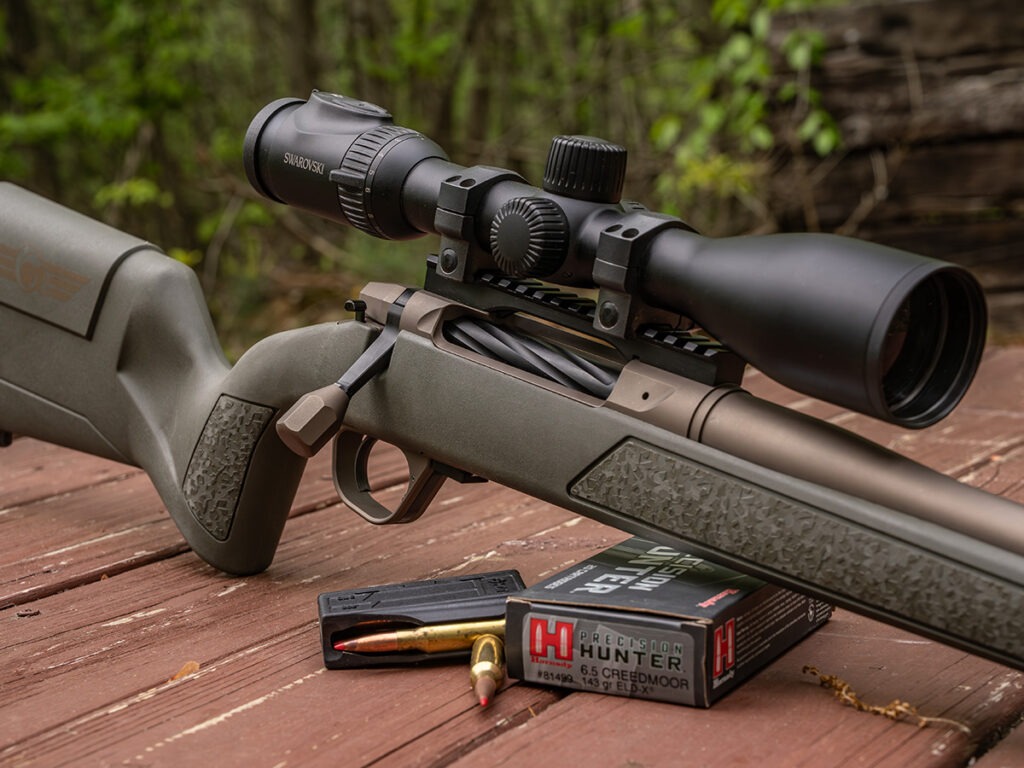
Since the introduction of the 6.5 Creedmoor, shooters and hunters have become infatuated with bullets that have a high ballistic coefficient (BC). This is understandable because, given the same velocity, the bullet with a higher BC will fly flatter and resist the wind better. Of course, for you to shoot a bullet with an extremely high BC you must have a rifling twist rate capable of stabilizing that bullet at the muzzle velocity you’ll be launching it at. This creates somewhat of a conundrum for shooters, because many older rifles/cartridges do not have rifling twist rates capable of stabilizing modern high BC bullets.
The High BC Advantage
To get an idea of the advantages offered by bullets with high BCs, let’s look at a comparison between a Sierra Pro-Hunter 180-grain round-nose bullet and a 180-grain Sierra Tipped GameKing bullet in 0.30-caliber. The round-nose Pro-Hunter bullet has a G1 BC of 0.240 and the Tipped GameKing bullet has a G1 BC of 0.543. Using Hodgdon’s online load data resource, we can see that from a .308 Winchester both bullets can be pushed to a reasonable muzzle velocity of about 2,600 fps from a 24-inch barrel.
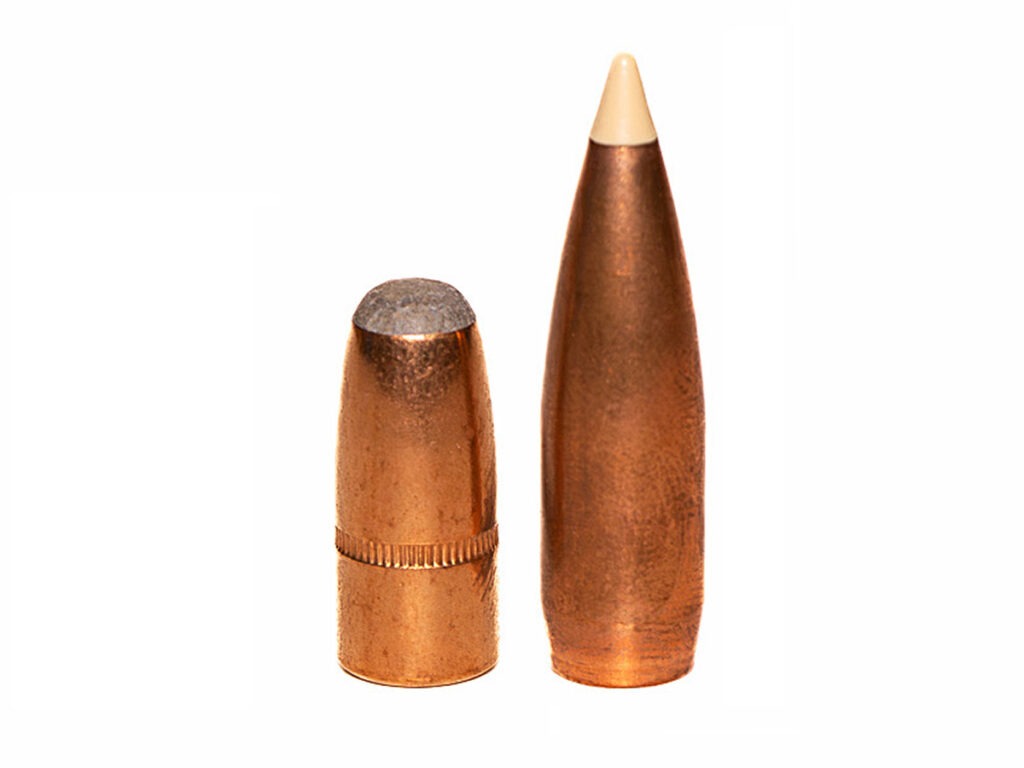
The chart below depicts the trajectory of both bullets given a 100-yard zero and the wind drift given a 90-degree 10-mph crosswind.
| BULLET | BC | MV (fps) | 200 yards Drop/Drift (in.) | 300 yards Drop/Drift (in.) | 400 yards Drop/Drift (in.) | 500 yards Drop/Drift (in.) |
| RN Pro-Hunter | 0.240 | 2,600 | -5.47/6.73 | -20.47/16.33 | -48.75/31.40 | -95.57/52.77 |
| Tipped GameKing | 0.543 | 2,600 | -4.34/2.75 | -15.36/6.35 | -34.02/11.64 | -61.45/18.80 |
As you can see, beyond 200 yards the bullet with the substantially higher BC flies much flatter and drifts a lot less in the wind. If you plan on shooting at targets or animals beyond 200 yards, the higher BC bullet is the obvious choice. However, most deer and other big game animals are taken inside 250 yards. This means that, for most hunters, a high BC bullet is probably not a necessity.
The Velocity Advantage
Velocity is the driving force behind any bullet, and the more velocity a bullet has the flatter it will shoot and the less it will drift in the wind. This is because of time of flight, which is a ballistic aspect few pay much attention to. Time of flight matters because the longer it takes a bullet to reach the target, the more time gravity and wind will affect it.
The only way to gain more velocity—a substantial amount of velocity—from your rifle is to reduce bullet weight. If you want a flatter trajectory but your rifle/cartridge cannot stabilize bullets with seriously high BCs, reducing bullet weight is a viable option.
Let’s look at the difference between the Tipped GameKing bullet—which has a reasonably high BC—at 2,600 fps and a 150-grain Nosler AccuBond at 2,950 fps with a BC that’s almost 20 percent less.
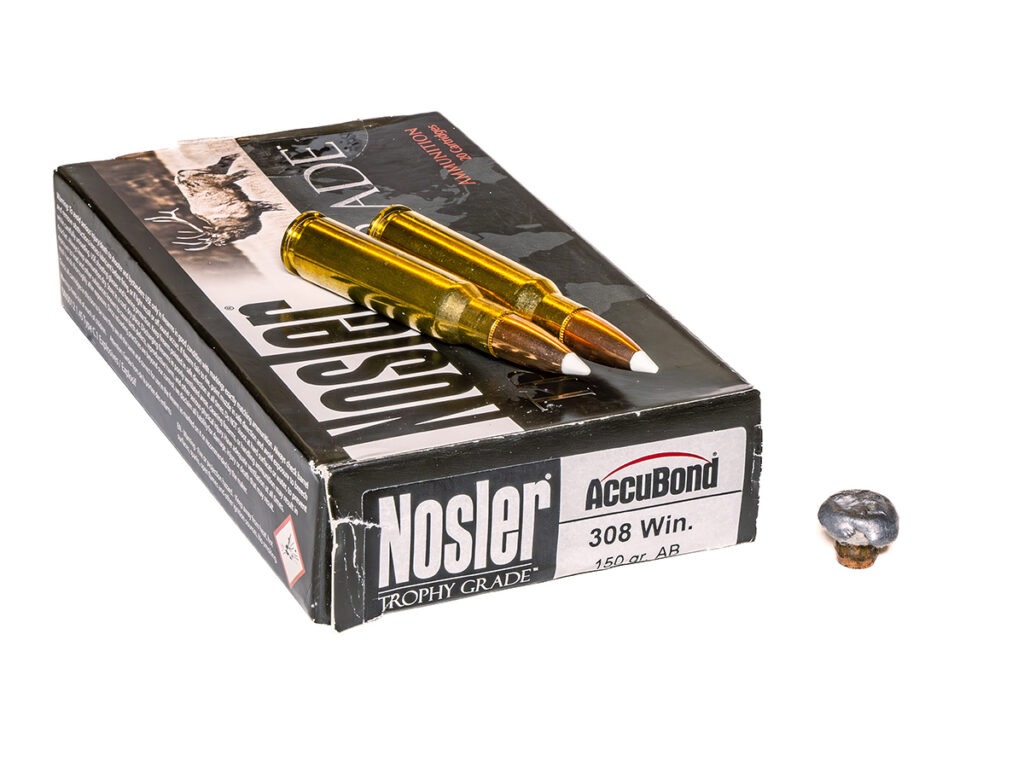
In this comparison, the faster, 150-grain bullet drops substantially less than the higher BC and heavier bullet, and wind drift is very similar. This is because it takes the 150-grain bullet 0.62 of a second to get to 500 yards, and it takes the 180 bullet 0.68 of a second to travel that distance. Here, it looks like the lighter-weight lower-BC bullet is a better option, but some hunters might be concerned about kinetic energy—thinking the heavier bullet will hit harder.
| BULLET | BC | MV (fps) | 200 yards Drop/Drift (in.) | 300 yards Drop/Drift (in.) | 400 yards Drop/Drift (in.) | 500 yards Drop/Drift (in.) |
| AccuBond | 0.435 | 2,950 | -3.16/2.91 | -11.78/6.74 | -26.79/12.44 | -49.37/20.24 |
| Tipped GameKing | 0.543 | 2,600 | -4.34/2.75 | -15.36/6.35 | -34.02/11.64 | -61.45/18.80 |
At 100 yards, the 180-grain bullet has 2,379 foot-pounds of kinetic energy, and the 150-grain bullet has 2,491. At 300 yards, the kinetic energy of the bullets is about the same, and at 500 yards the higher BC 180-grain bullet has a slight (6 percent) kinetic energy advantage, which is not enough to fret over.
As a final point of comparison, let’s look at recoil. From an 8-pound rifle, the 180-grain load will generate 18.68 foot-pounds of free recoil energy, and the 150-grain bullet will generate 18.41 foot-pounds.
Though this is a comparison with the .308 Winchester, you would see similar performance by reducing the weight of the bullet with other cartridges as well. For hunters, inside 500 yards, lighter-weight fast-moving bullets can compete favorably with heavier but slower-moving high-BC bullets.
This Cartridge Vs. That Cartridge
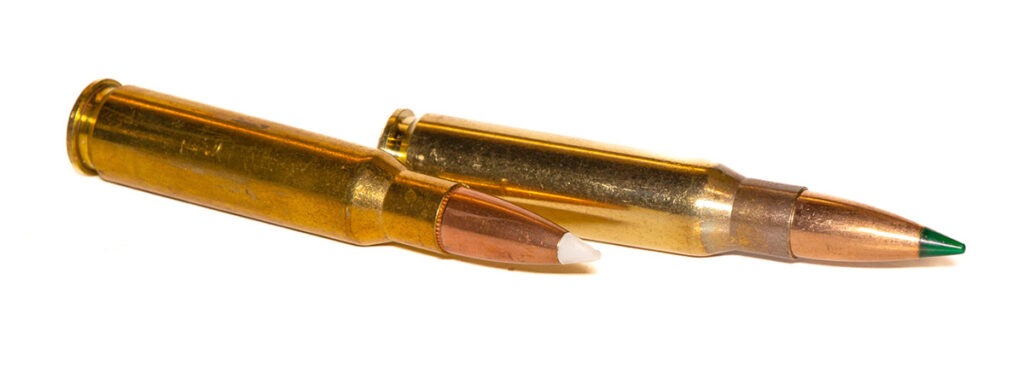
Of course, most of the BC and velocity comparisons modern shooters and hunters consider often deal with different cartridges of the same caliber. A shooter or hunter with an older cartridge is trying to decide if he needs a newer—fast twist—cartridge. This is where the real conundrum of BC versus velocity often comes into play.
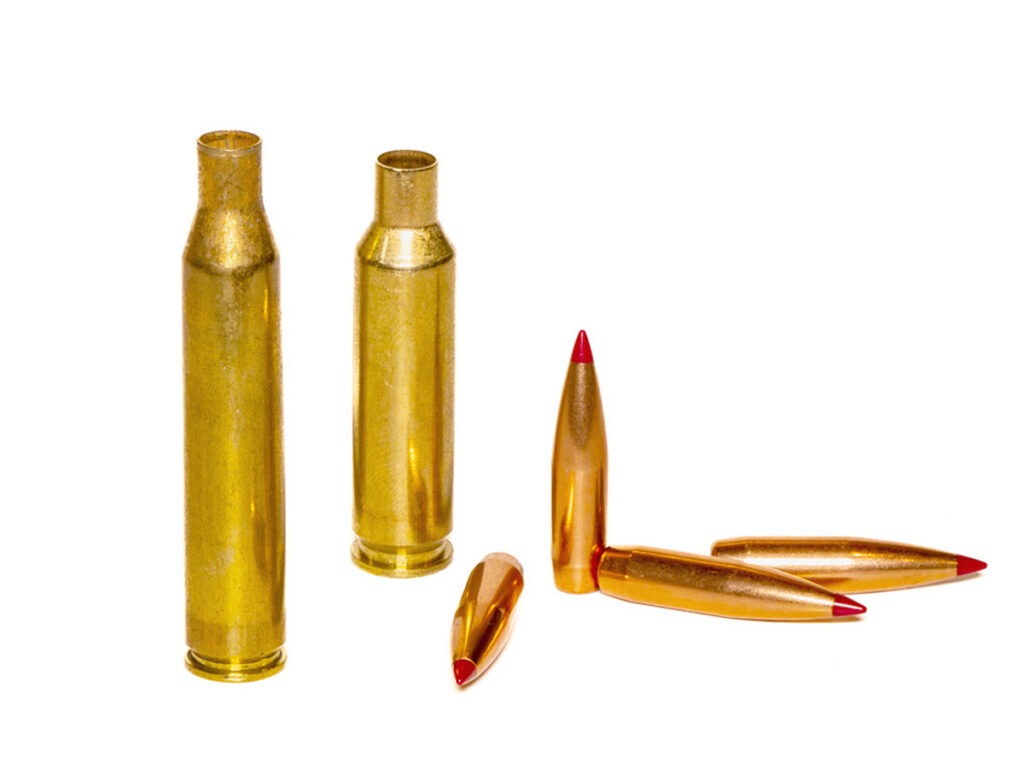
For example, imagine you have a .25-06 Remington, which was introduced in 1969 with a 1:10 twist, and are considering the new .25 Creedmoor with a 1:7.5 twist that was introduced last year.
First, let’s look at these two cartridges with the same Hornady 110-grain ELD-X bullet, which has a G1 BC of 0.465. Out of a 24-inch barrel, the .25-06 will push this bullet to about 3,150 fps, and out of the .25 Creedmoor, it will have a muzzle velocity of about 3,050 fps. As expected, since both cartridges are shooting the same bullet, the bullet with the faster muzzle velocity has the advantage at every distance.
| BULLET | BC | MV (fps) | 200 yards Drop/Drift (in.) | 300 yards Drop/Drift (in.) | 400 yards Drop/Drift (in.) | 500 yards Drop/Drift (in.) |
| .25-06 Remington | 0.465 | 3,150 | -2.54/2.48 | -9.73/5.72 | -22.9/-10.50 | -41.11/16.99 |
| .25 Creedmoor | 0.633 | 3,050 | -2.82/2.59 | -10.61/5.98 | -24.17/10.98 | -44.44/17.79 |
Of course, the advantage the .25 Creedmoor has over the .25-06 has nothing to do with velocity and everything to do with twist rate. The .25 Creedmoor can stabilize bullets with a higher BC. In this next comparison, the .25 Creedmoor is shooting a 128-grain ELD-X bullet with a G1 BC of 0.633 at a muzzle velocity of 2,850 fps. For the .25-06, we’ll stick with the same 0.465 BC 110-grain ELD-X bullet, which is one of the best performing in this cartridge.
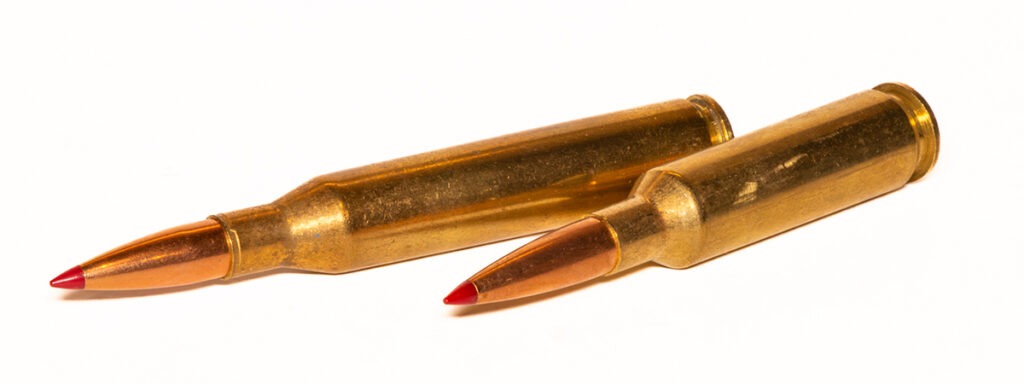
Here, even though the .25-06 is shooting a lower-BC bullet, it still has a trajectory advantage all the way out to 500 yards. On the other hand, the heavier bullet from the .25 Creedmoor does have a slight advantage in kinetic energy and wind drift. However, neither is of enough consequence to really matter.
| BULLET | BC | MV (fps) | 200 yards Drop/Drift (in.) | 300 yards Drop/Drift (in.) | 400 yards Drop/Drift (in.) | 500 yards Drop/Drift (in.) |
| .25-06 Remington | 0.465 | 3,150 | -2.54/2.48 | -9.73/5.72 | -22.9/-10.50 | -41.11/16.99 |
| .25 Creedmoor | 0.633 | 2,850 | -3.25/2.06 | -11.81/4.70 | -26.28/8.56 | -47.36/13.72 |
But let’s take this comparison out to a longer range. This table shows where high-BC bullets—even when launched at slower velocities—can outperform bullets with a lesser BC but with a faster velocity. At these distances, we’re beyond what would constitute an ethical shot at a big game animal.

However, those who compete in long-range competitions or just enjoy long-range shooting recreationally will especially appreciate the wind drift advantage the high-BC bullet delivers at extreme distance.
| BULLET | BC | MV (fps) | 700 yards Drop/Drift (in.) | 800 yards Drop/Drift (in.) | 900 yards Drop/Drift (in.) | 1,000 yards Drop/Drift (in.) |
| .25-06 Remington | 0.465 | 3,150 | -101.92/35.94 | -146.75/48.90 | -203.60/65.54 | -274.76/83.18 |
| .25 Creedmoor | 0.633 | 2,850 | -112.23/28.45 | -159.02/38.27 | -215.99/49.93 | -285.06/63.56 |
It’s still worth noting that, from a trajectory standpoint, the lower-BC bullet from the .25-06 at 3,150 fps shoots flatter than the higher-BC bullet from the .25 Creedmoor all the way out to 1,000 yards. Should you trade in your .25-06 for a .25 Creedmoor, or maybe your older cartridge for a newer cartridge compatible with high-BC bullets? Practically speaking, only if you’re going to shoot at extreme range.
Apples to Apples
As a final comparison, let’s look at ballistic coefficient and velocity to see which would give you the most advantage with a 10 percent increase. If we bump the velocity of a .25 Creedmoor load by 10 percent to 3,135, and if we increase the bullet’s ballistic coefficient of another .25 Creedmoor load by the same percentage—from 0.633 to 0.696—which load would provide the best ballistics?
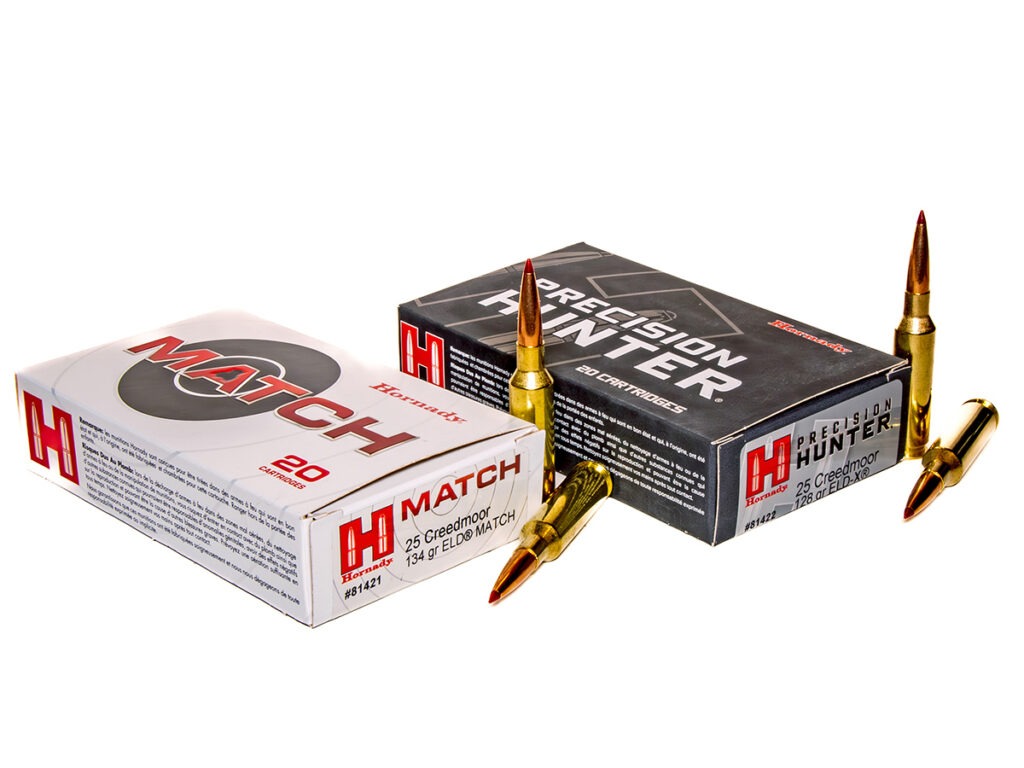
Here you can see that when the same percentage of increase is applied to velocity and ballistic coefficient, velocity wins out regarding drop and wind drift. It also wins out in terms of kinetic energy. The only advantage the load with the higher-BC bullet has is that it will recoil about 17 percent less.
| BULLET | BC | MV (fps) | 250 yards Drop/Drift (in.) | 500 yards Drop/Drift (in.) | 750 yards Drop/Drift (in.) | 1,000 yards Drop/Drift (in.) |
| .25 Creedmoor | 0.633 | 3,135 | -5.23/2.84 | -37.76/11.98 | -108.06/28.78 | 228.73/55.01 |
| .25 Creedmoor | 0.696 | 2,850 | -6.74/2.93 | -46.28/12.33 | -130.08/29.54 | -271.89/56.21 |
And the Point Is …
The point is actually two-fold.
First, unless a bullet has a substantial BC advantage, you will not see very much increase in performance except at extreme distance. Second, given like in kind increases, an increase in velocity is better than an increase in BC. Modern cartridges with fast rifling twist rates are marvelous creations. However, when it comes to rifle cartridge performance, you might need to spend some time with a ballistics calculator and do some math before you spend the money necessary for a new rifle chambered for a new wonder cartridge.
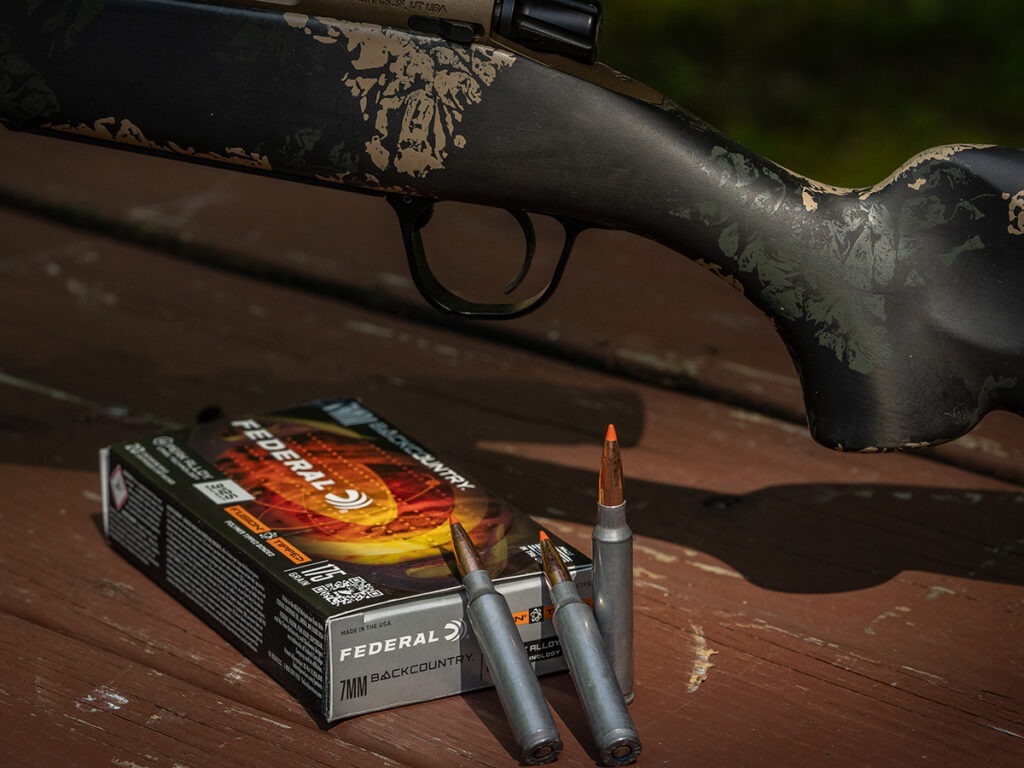
Your old cartridge loaded with a lighter weight bullet with a decent BC might perform just as well. On the other hand, if a new cartridge offers a faster velocity and a faster twist barrel, you’ll get the best ballistics possible in a given caliber.
High-BC bullets and fast twist rates are great, but velocity will always be king.
Look at it this way: A bullet with a muzzle velocity of 0 fps is worthless, no matter how high the bullet’s BC might be.
Editor’s Note: This article originally appeared in the June 2026 issue of Gun Digest the Magazine.
More On Bullets
Read the full article here