

NASA’s Artemis II astronauts launched for the moon with prior assistance from a U.S. Space Force unit responsible for all East Coast space launch operations.
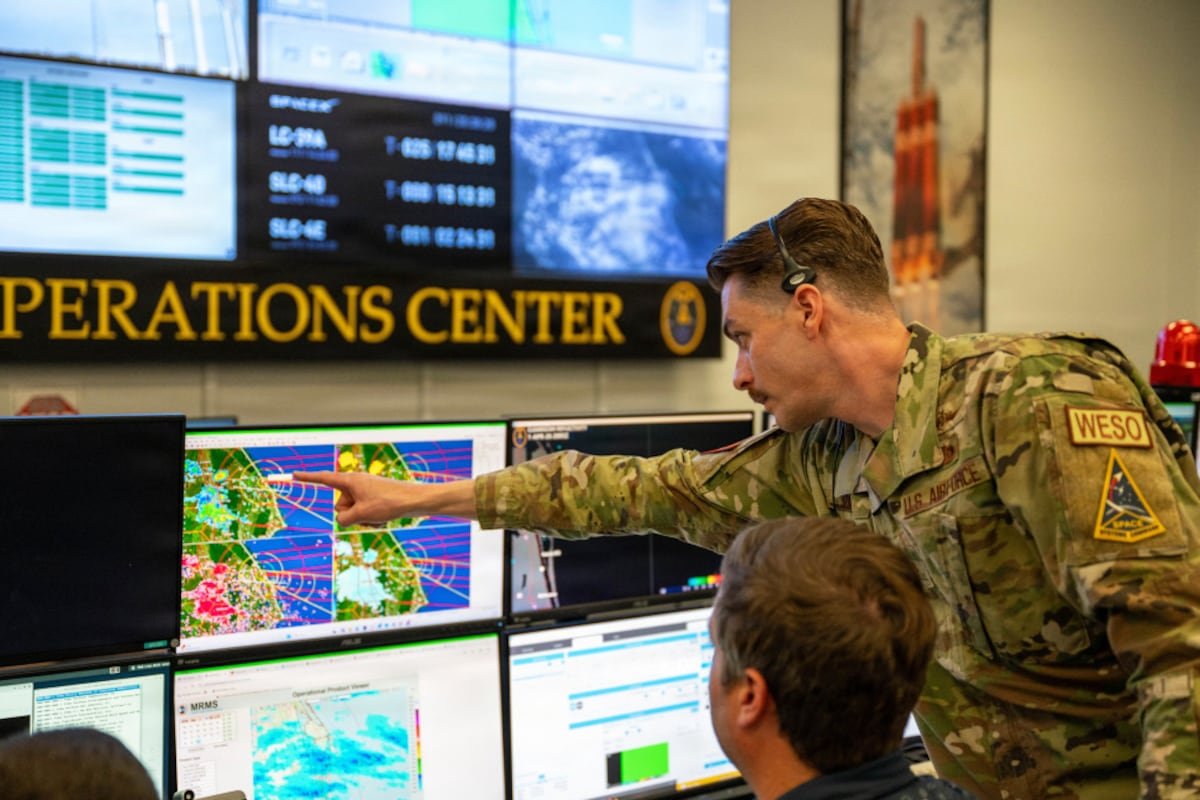
Personnel in Space Launch Delta 45, located at Patrick Space Force Base in Florida, aided the Artemis II mission even before the launch began, according to a Thursday Space Force release, by analyzing payloads, launch vehicles and their trajectories to cross-match them with “hazard zones.”
The zones, which include land, sea and air, are required to guarantee that no person or vehicle is within a certain distance from the pad, per the release. To ensure a safe launch, the hazardous zones were identified through hours of trajectory and debris analysis and included cross-agency coordination, Emma Cusano, SLD 45 flight safety analyst and aerospace engineer, said in the statement.
Ahead of the launch, SLD’s Office of Emergency Management also worked with state and local leaders to create emergency response plans in case of an anomaly. The office examined the hazard zones and decided on where roadblocks should be placed, how traffic should flow and where emergency response vehicles would be stationed, according to the statement.
“We are committed to doing everything we can in the planning phase to ensure we are ready to execute our emergency response plans,” Air Force Master Sgt. Robert Ridgway, SLD 45 installation emergency manager, said in the release.
“Having effective plans in place is necessary for both ensuring the safety of the local community and the astronauts in the capsule,” Ridgway continued.
The launch emergency operations center was created and overseen by SLD’s Office of Emergency Management, and it was tasked with surveying and potentially responding to any dangers a launch could pose to Cape Canaveral Space Force Station and its community, the statement reads.
The center stayed staffed during the April 1 launch to disseminate emergency information and directions because of the “inherently volatile nature of spaceflight,” per the statement.
The SLD 45’s 1st Range Operations Squadron and the 45th Weather Squadron supported getting launch vehicles from the pad into orbit by providing analysis of telemetry data and weather and continuously monitoring conditions that could impact the safety of the launch.
On top of that, the 45th Logistics Readiness Squadron gave airfield support to coordinate the Air Force Detachment 3’s human spaceflight recovery team, which oversees rescue forces at the Space Force base.
“Access to space would not be possible without the contributions of SLD 45 and its oversight of the Eastern Range,” Space Force Col. Joyce Bulson, SLD 45 deputy commander for operations, said in the statement. “These contributions enabled more than 100 launches in 2025, and we aim to only increase the pace.”
At a velocity of about 3,700 miles per hour, Orion, the spacecraft in the Artemis II mission, and the four astronauts inside are approximately 150,000 miles away from the moon and 100,000 miles from Earth as of Friday afternoon, according to NASA’s mission tracker.
Cristina Stassis is a reporter covering stories surrounding the defense industry, national security, military/veteran affairs and more. She previously worked as an editorial fellow for Defense News in 2024 where she assisted the newsroom in breaking news across Sightline Media Group.
Read the full article here